Introduction to the Microsoft CSP Program
CloudCockpit Team | Published: February 2024 | Last updated: April 2026
The Microsoft Cloud Solution Provider (CSP) program, often referred to simply as CSP Microsoft or MS CSP, has been a cornerstone in cloud strategy for partners and customers. It enables businesses to resell Microsoft cloud products, manage the full customer lifecycle, and build recurring revenue around Microsoft 365, Azure, and Dynamics 365. This guide covers how the program works, the three partner types, current FY26 requirements, and what to expect operationally.
How the CSP Program Works
The CSP Microsoft program operates on a resale model: partners purchase Microsoft cloud products and resell them to business customers, managing the full relationship from provisioning to support. All transactions flow through Partner Center, Microsoft's centralized management interface for licenses, billing, customer accounts, and compliance.
The program supports three partner roles, each with a different relationship to Microsoft:
Indirect Resellers
Work through a Distributor that holds the direct billing relationship with Microsoft. This is the entry-level path — lower operational overhead, no direct credit exposure to Microsoft, and faster time to market. The trade-off is lower margin control and dependency on the Distributor's pricing and support infrastructure.
Direct Bill partners
Purchase licences directly from Microsoft and own the end-to-end customer relationship, including billing, support, and provisioning. This model requires API integration with Partner Center and a mature support operation. The higher operational complexity comes with greater margin control and a closer relationship with Microsoft.
Distributors
Sit at the top of the channel. They purchase from Microsoft at scale and enable Indirect Resellers to transact. Distributors are responsible for their reseller network's billing and are held to the highest authorization standards in the program.
Subscription terms and billing cycles
One of the first operational decisions in CSP Microsoft licensing is choosing the right subscription term for each customer. The program supports monthly or annual commitment terms across most products:
- Monthly terms offer maximum flexibility, seats can be adjusted or cancelled at the end of each month. The per-seat price is higher.
- Annual terms carry a lower per-seat price but restrict seat reductions mid-term. Partners can choose between paying monthly or upfront for the full year.
For most Microsoft 365 products, both monthly and annual options are available. For some Dynamics 365 products, three-year terms are also supported. Choosing the wrong term for a customer, particularly locking into an annual commitment before needs are confirmed, is one of the most common sources of margin erosion in CSP operations.
The Microsoft Customer Agreement (MCA)
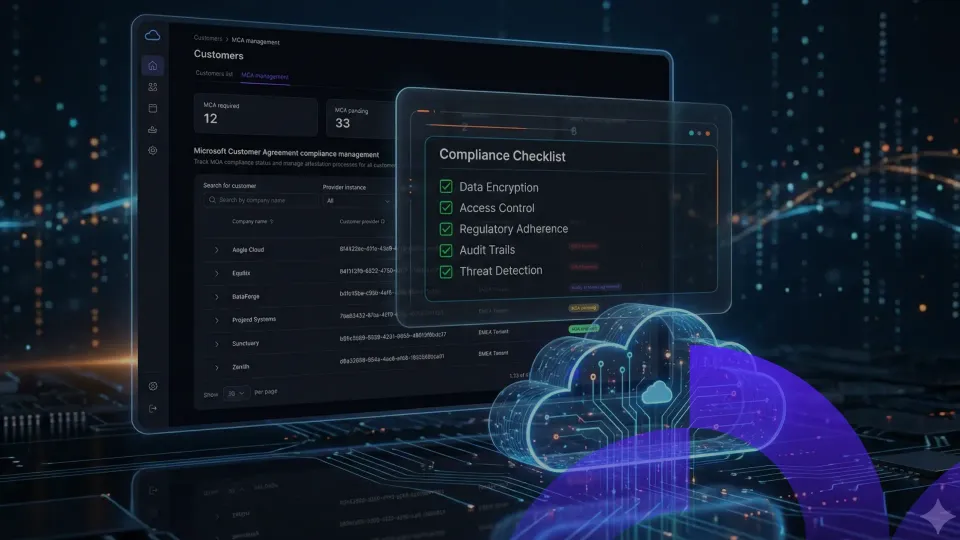
Before any subscription can be provisioned, the end customer must accept the Microsoft Customer Agreement (MCA). As a CSP partner, you are responsible for confirming this acceptance in Partner Center, either by recording that the customer accepted it directly, or by attesting on their behalf. Transactions for customers without a confirmed MCA acceptance are blocked.
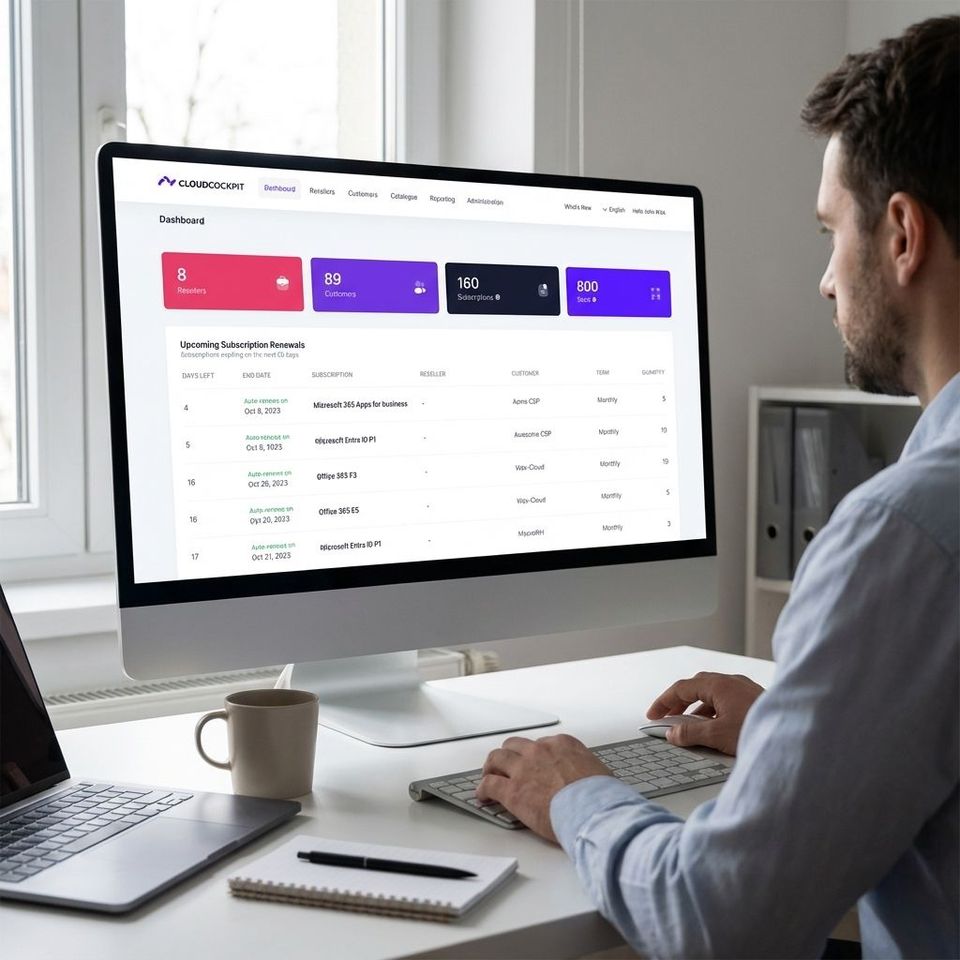
CloudCockpit note: Managing subscription terms across hundreds of customers — each with different renewal dates, billing cycles, and seat counts — is where manual processes break down fastest. Partner Center provides the transaction layer, but it doesn't consolidate margin visibility or alert you to upcoming renewals at risk. That's the operational gap a platform like CloudCockpit is built to close.
Benefits of the CSP Program for Businesses
For those entering CSP Microsoft licensing, the program offers several structural advantages over other Microsoft channel models.
Access to CSP offer: MS CSP partners have access to the full catalogue of CSP offers across Microsoft 365, Azure, and Dynamics 365, along with exclusive promotions and pricing not available in other licensing programs.
Simplified billing: Partners receive a single monthly invoice from Microsoft covering all customer subscriptions. For Indirect Resellers, this is handled by the Distributor, reducing direct financial exposure to Microsoft.
Customer relationship ownership: CSP partners own the full customer relationship: billing, support, and account management. This proximity creates upsell and cross-sell opportunities that are structurally harder in other licensing models.
Access to Partner Center tools: Partners get access to Partner Center capabilities including customer management, subscription provisioning, API integrations, security dashboards, and usage analytics.
Training and resources: MAICPP membership includes access to Microsoft training paths, certification resources, and go-to-market support aligned to Solutions Partner designations.
For more details, visit the Microsoft CSP Program.
Requirements: how to become a CSP Partner
The CSP Microsoft licensing program has three distinct partner paths: Direct Bill, Distributor, or Indirect Reseller. Each has its own eligibility requirements, which Microsoft assesses both at enrollment and annually.
| Partner type | Minimum revenue (TTM) | Measurement scope | Support plan required | Minimum prior experience |
|---|---|---|---|---|
| Indirect Reseller | USD $1,000 | Per tenant (PLA level) | No | None |
| Direct Bill | USD $1,000,000 | Per PGA (all tenants) | Yes, ASfP or PSfP | 12 months as Indirect Reseller |
| Distributor | USD $30,000,000 | Per authorized region | Yes, ASfP or PSfP | Individual assessment by Microsoft |
Direct Bill Partner
A Direct Bill partner purchases Microsoft licences and offers directly from Microsoft and manages the full end-to-end customer relationship. As of FY26, the following requirements apply:
- MAICPP membership: Active enrollment in the Microsoft AI Cloud Partner Program (MAICPP) and a Partner Location Account (PLA) ID for the CSP region where you intend to sell.
- Revenue threshold: At least USD $1 million in trailing 12-month (TTM) CSP transactional revenue at the Partner Global Account (PGA) level.
- Reseller tenure: A minimum of 12 months transacting as an Indirect Reseller at the tenant level before applying.
- Solutions Partner designation: Active enrollment in at least one Solutions Partner designation within MAICPP. This is a requirement introduced in October 2025.
- Support plan: An active Microsoft support plan, either Advanced Support for Partners (ASfP) or Premier Support for Partners (PSfP). The support plan must be purchased only after credit approval is confirmed.
- Security requirements: MFA enabled for all administrative users in the CSP tenant; a security contact designated in Partner Center; and response to security alerts within 24 hours on average.
- Credit check: Microsoft conducts a credit check as part of the enrollment process. The support plan purchase should only proceed after this check passes.
- Capabilities Assessment: New Direct Bill applicants must complete a third-party capabilities assessment covering operational readiness, security maturity, and support infrastructure.
Starting October 2025, Microsoft conducts annual reassessments of all existing Direct Bill partners during their CSP onboarded anniversary month. Partners who fail to meet requirements are required to transition to Indirect Reseller status.
Source: Direct-bill partner requirements Microsoft Learn
Distributor (Indirect Provider)
Distributors purchase cloud offers directly from Microsoft and resell them to Indirect Resellers across their channel. This is the highest-tier CSP authorization and the most demanding to obtain and maintain. FY26 requirements per authorized region:
- Revenue threshold: At least USD $30 million in trailing 12-month (TTM) billed CSP revenue per authorized region. This is assessed annually.
- Capabilities assessment: Distributors must pass an automated assessment covering operational readiness, channel management, billing, provisioning, customer support, and security.
- Support plan: An active Advanced Support for Partners (ASfP) or Premier Support for Partners (PSfP) plan at the Partner Global Account (PGA) level.
- Security requirements: All mandatory Partner Center security requirements must be met: MFA for all administrative users, a designated security contact, and response to security alerts within 24 hours.
- Microsoft Partner Agreement (MPA): The Distributor MPA must be accepted in Partner Center.
- Partner of Record (POR) validation: From December 1, 2025, Distributors must assign a valid POR, with an active, region-matched CSP Indirect Reseller tenant and verified PLA ID, at the time of every new subscription order and most subscription updates. Transactions without a valid POR are blocked.
The USD $30M revenue threshold makes the Distributor path accessible only to partners with significant scale. Partners exploring this model should contact their Microsoft account manager directly, as authorization is evaluated on a case-by-case basis.
Source: Partner Center announcements, May 2025: Requirement updates for CSP partners Microsoft Learn
Indirect Reseller
An Indirect Reseller works with a Distributor that holds the direct relationship with Microsoft. This is the lower-barrier entry path into the CSP program. FY26 requirements:
- MAICPP membership: Active enrollment and a PLA ID matching the CSP country/region where you intend to transact.
- Revenue threshold: At least USD $1,000 in CSP transactional revenue during the preceding 12 months at the PLA tenant level. This is validated annually.
- Microsoft Partner Agreement (MPA): The MPA must be accepted by a Global Admin in Partner Center. Enrollment is only activated after MPA acceptance.
- Security requirements: MFA enabled for all administrative users; a security contact designated in Partner Center.
- Business email: A valid, monitored business work email address. Personal, disposable, or generic addresses (info@, admin@) are not accepted.
- Authority to sign: The enrolling user must have authority to accept legal agreements on behalf of the organisation and must hold the Global Admin role in Partner Center.
- Partner of Record (POR): From September 1, 2025, Indirect Resellers must have an active CSP tenant and a verified PLA ID to be assigned as Partner of Record on transactions.
Source: Indirect Reseller eligibility requirements Microsoft Learn
Cost Management and Optimization in CSP
Managing costs in CSP Microsoft licensing operates on two distinct layers: the Microsoft layer (what the platform provides natively) and the partner layer (what requires additional tooling to control). Confusing the two is expensive.
What Microsoft provides natively
For Azure consumption, Microsoft offers Microsoft Cost Management, a built-in tool that gives partners and customers visibility into Azure spending through dashboards, budgets, and alerts. Partners can set spending budgets per customer tenant in Partner Center and receive notifications as consumption approaches defined thresholds.
For licence-based products (Microsoft 365, Dynamics 365, and others), Partner Center provides monthly reconciliation files that detail every transaction: seat counts, unit prices, billing dates, and adjustments. These files are the source of truth for what Microsoft will invoice.
What Microsoft does not provide
Native Microsoft tooling has three structural gaps that matter operationally:
1. No margin visibility. Partner Center shows what Microsoft charges you. It does not show what you charge your customers, what your margin is per product, per customer, or per reseller. That calculation lives in spreadsheets unless you have a dedicated platform.
2. No consolidated billing across customers. Each customer's reconciliation data is separate. Partners managing dozens or hundreds of tenants have no single view of total revenue, cost, and margin, without building it themselves or using a third-party tool.
3. No proactive renewal or risk alerts. Microsoft Cost Management monitors Azure consumption in near real-time. It does not alert you that a customer's annual licence is expiring in 7 or 30 days, that a seat count has been under the contracted minimum for two months, or that a customer's Azure spend has spiked 200% overnight.
The operational cost of these gaps
For partners managing CSP licenses with Microsoft at scale, these gaps compound quickly. Billing errors from manual reconciliation, missed renewals, and undetected Azure fraud are among the most common sources of unexpected losses in CSP operations. One Azure tenant compromised for crypto-mining can generate charges in the tens of thousands before a manual review catches it.
CloudCockpit note: CloudCockpit connects directly to Partner Center APIs and consolidates margin, billing, and consumption data in a single view, across all customers and resellers. Automated reconciliation runs against Microsoft's billing data daily. Azure consumption alerts fire in real time, not at end of month. For partners operating at scale, this isn't a feature. It's the difference between knowing your numbers and finding out too late.
Support and Resources Available for CSP Partners
The Microsoft CSP program offers comprehensive support, including:
- Technical Assistance: Access to specialized technical support to ensure uninterrupted solution delivery. The possibility of opening tickets in various languages
- Marketing and Sales: Marketing resources and tools to help promote CSP solutions and expand market reach.
However, it's important to emphasize that it's not Microsoft's responsibility to interact with CSP’s clients or communicate about the status of a particular subscription. In fact, Microsoft expects direct and indirect sellers to do this since they are the ones financially interacting with the clients.
Note: Communications from Microsoft to clients regarding subscriptions will occur in a targeted manner and only in specific cases, such as in the event of a systemic failure.
Some important requirements when offering support to your client include:
It's crucial to note that the end customer (the solution user) cannot create tickets directly with Microsoft. They need to open the ticket with a direct or indirect reseller, and that reseller must provide the first level of support to the customer.
What you need: When customers contact you for support, you're required to:
- Receive incoming support requests from customers.
- Diagnose issues to the best of your ability.
- Resolve issues within the scope of baseline support boundaries.
How to prove it: To fulfill your customer support requirement, you can:
- Outsource all or part of the support structure.
- Set up a structure to provide support directly.
You can charge for all or part of the support that you provide to customers. Be sure to tell customers the types of support you provide, the service hours, contact method, and the pricing if you're charging for support. In cases of extreme necessity, the CSP may escalate the ticket to Microsoft. Visit the Partner Center to understand more.
Support Obligations in MS CSP
In the CSP model, Microsoft does not communicate directly with end customers about their subscriptions. The CSP partner owns the full support relationship.
Partners are required to receive incoming support requests, diagnose issues to the best of their ability, and resolve them within defined support boundaries. Escalation to Microsoft is available only for undocumented service problems, service outages, bugs, or large-scale network disruptions.
One additional constraint applies to Azure: only Direct Bill partners and Distributors can open Azure support requests on behalf of customers. Indirect Resellers must work through their Distributor for Azure escalations.
Partners can structure their support in three ways: provide it directly, resell support from another entity, or outsource all or part of the support structure. The obligation to the customer remains with the CSP partner regardless of how support is delivered.
Source: Billing support practices for CSP partners, Microsoft Learn
The Future of the CSP Program and Opportunities
Where the CSP Program Is Heading
The CSP program is not static. Microsoft has been tightening authorization requirements, raising the bar for operational maturity, and shifting incentives toward solution-led partners. Three trends define where the program is heading in FY26 and beyond.
Authorization requirements are getting stricter and annual
The most significant structural change in the program's recent history took effect in October 2025: Microsoft now conducts annual reassessments of all Direct Bill partners and Distributors. Meeting the requirements at enrollment is no longer sufficient. Partners are evaluated every year on revenue thresholds, Solutions Partner designations, security compliance, and support capabilities.
Partners who fail to meet requirements during their reassessment window have 30 days to remediate before deauthorization proceedings begin. For Direct Bill partners, the consequence is a mandatory transition to Indirect Reseller status and a one-year waiting period before reapplying.
This shift signals Microsoft's intent to reduce the number of undercapitalized partners operating at the Direct Bill level and concentrate the channel around partners with proven operational maturity.
Security is now a mandatory operating requirement
As of October 2025, security compliance is no longer advisory, it is an authorization requirement. All CSP partners must maintain MFA for all administrative users, designate a security contact in Partner Center, and respond to security alerts within 24 hours. These requirements are validated annually.
The driver is straightforward: compromised partner tenants are a systemic risk to the channel. Azure fraud through hijacked customer tenants remains one of the most common and costly incidents in CSP operations. Microsoft is shifting accountability explicitly to partners.
AI products are now transactable in CSP
Microsoft 365 Copilot and related AI add-ons are now available through the CSP channel. For partners, this represents a new revenue layer on top of existing customer relationships, upselling AI capabilities to customers already running Microsoft 365 workloads.
The opportunity is real, but so is the complexity: Copilot licensing requires specific base licence eligibility, and the conversation with customers is fundamentally different from standard seat-based licensing. Partners who invest in understanding the AI product portfolio now are better positioned to capture renewals and expansions as enterprise adoption accelerates.
CloudCockpit note: Annual reassessments and tightening authorization requirements mean that operational readiness is no longer a one-time checklist, it is an ongoing condition of doing business in CSP. Partners operating without consolidated visibility into their revenue, security posture, and licence compliance are taking on risk they may not see until it's too late.